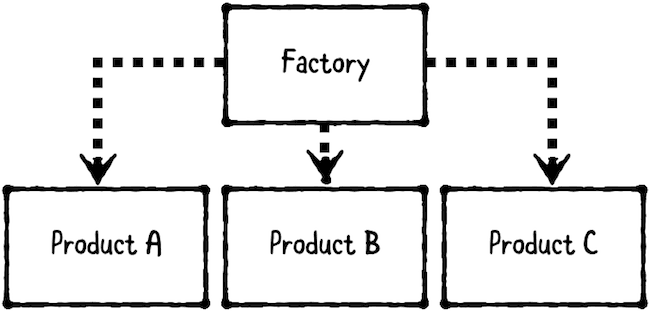
🧱 Notification System — Factory (System Design Question — Solution)
This document is a solution write-up for the system design question: implement a notification system that can send messages through different channels (Email, SMS, Push) based on user preferences. It presents the problem, a practical TypeScript implementation using the Factory pattern, usage examples, and notes on production considerations.
Problem — Notification System (Factory use-case)
Modern applications need to communicate with users through various channels. The requirements for a flexible notification system are:
- Support multiple notification channels (Email, SMS, Push)
- Allow sending to multiple channels for a single notification
- Make channel selection flexible and configurable
- Keep channel implementations independent and encapsulated
- Allow easy addition of new notification channels
Why does this map well to the Factory pattern?
- Different notification channels share a common interface but have distinct implementations
- Channel selection can be determined at runtime
- New channels can be added without modifying existing code
- Factory encapsulates the creation logic and dependencies
- Clients remain decoupled from specific notification implementations
Example Inputs (for the tutorial)
A TypeScript interface defining the notification contract:
export type TNotificationChannel = 'Email' | 'SMS' | 'Push';

export type TNotificationPayload = {
    id: string;
    message: string;
    channels: TNotificationChannel[];
};

export type TNotificationResult = {
    id: string;
    error?: string;
    success: boolean;
    channel: TNotificationChannel;
};

export interface INotify {
    notify(payload: TNotificationPayload): TNotificationResult;
}
Solution — TypeScript Notification System
We'll implement these key components:
- Channel-specific notifiers: Concrete implementations for Email, SMS, and Push
- NotificationFactory: Creates appropriate notifier instances
- NotificationService: Coordinates sending through multiple channels
Key Design Choices
- Interface-based design for notification channels
- Factory pattern for notifier instantiation
- Service layer for multi-channel coordination
- Type-safe channel enumeration
- Consistent result structure across channels
🧩 Implementation (Concise, Annotated)
// Concrete notification implementations
export class EmailNotification implements INotify {
    public notify(payload: TNotificationPayload): TNotificationResult {
        // Simulate sending email notification
        console.log(`Sending Email Notification: ${payload.message}`);
        return {
            id: payload.id,
            success: true,
            channel: 'Email'
        };
    }
}

export class SMSNotification implements INotify {
    public notify(payload: TNotificationPayload): TNotificationResult {
        // Simulate sending SMS notification
        console.log(`Sending SMS Notification: ${payload.message}`);
        return {
            id: payload.id,
            success: true,
            channel: 'SMS'
        };
    }
}

export class PushNotification implements INotify {
    public notify(payload: TNotificationPayload): TNotificationResult {
        // Simulate sending Push notification
        console.log(`Sending Push Notification: ${payload.message}`);
        return {
            id: payload.id,
            success: true,
            channel: 'Push'
        };
    }
}

// Factory for creating notification instances
export class NotificationFactory {
    public createNotification(channel: string): INotify {
        switch (channel) {
            case 'Email':
                return new EmailNotification();
            case 'SMS':
                return new SMSNotification();
            case 'Push':
                return new PushNotification();
            default:
                throw new Error(`Notification channel ${channel} is not supported.`);
        }
    }
}

// Service for coordinating multi-channel notifications
export class NotificationService {
    private factory: NotificationFactory;

    public constructor(factory: NotificationFactory) {
        this.factory = factory;
    }

    public sendNotification(payload: TNotificationPayload): TNotificationResult[] {
        const results: TNotificationResult[] = [];
        for (const channel of payload.channels) {
            const notifier = this.factory.createNotification(channel);
            const result = notifier.notify(payload);
            results.push(result);
        }
        return results;
    }
}
🧠 Usage Example
export class Client {
    public static main(): void {
        // Create factory and service
        const factory = new NotificationFactory();
        const service = new NotificationService(factory);

        // Create notification payload
        const payload: TNotificationPayload = {
            id: '1',
            message: 'This is a test notification',
            channels: ['Email', 'SMS', 'Push']
        };

        // Send notification through all channels
        const results = service.sendNotification(payload);
        console.log('Notification Results:', results);
    }
}

// Run the client
Client.main();

// Output:
// Sending Email Notification: This is a test notification
// Sending SMS Notification: This is a test notification
// Sending Push Notification: This is a test notification
//
// Notification Results: [
//   { id: '1', success: true, channel: 'Email' },
//   { id: '1', success: true, channel: 'SMS' },
//   { id: '1', success: true, channel: 'Push' }
// ]
Notes, Edge-Cases & Alternatives
-
Error Handling:
- Each channel should handle its specific errors
- Service layer should aggregate results
- Failed channels shouldn't stop other channels
-
Channel Configuration:
- Channels might need different configuration
- Consider using dependency injection for channel-specific dependencies
- Support runtime configuration updates
-
Async Operations:
- Real implementations would be asynchronous
- Consider using Promise.all for parallel sending
- Implement timeouts per channel
-
Testing:
- Mock each channel independently
- Test factory with invalid channels
- Verify multi-channel coordination
- Test error scenarios
-
Extension Points:
- New channels just need to implement INotify
- Factory can be extended without modifying existing code
- Service can be enhanced with retry logic or priorities
✅ Conclusion
The Factory pattern provides a clean solution for managing multiple notification channels. The TypeScript implementation demonstrates how to create a flexible, extensible system that can easily accommodate new channels while keeping the core logic simple and maintainable.
Key benefits realized:
- Clean separation between channel implementations
- Runtime channel selection
- Easy addition of new channels
- Consistent interface across all channels
- Simple multi-channel coordination
- Type-safe implementation
Read more

System Design Question — Configuration Manager (Singleton) — Solution
Solution: Implement a Singleton Configuration Manager in TypeScript — problem statement, implementation, usage, and notes.
System Design Question — Resume Builder (Builder) — Solution
Solution: Implement a Resume Builder in TypeScript — problem statement, implementation, usage, and notes.

System Design Question — Enemy Cloner (Prototype) — Solution
Solution: Implement a Game Enemy Cloning System in TypeScript — problem statement, implementation, usage, and notes.